If you’ve been diagnosed with PCOS, now called PMOS, there’s a good chance someone told you to cut carbs. Maybe it was your doctor. Maybe it was a stranger on TikTok eating a lettuce wrap with a little too much enthusiasm. Either way, carbs probably feel like the enemy right now.
Short answer: no, you don’t have to give them up. Here’s the longer one.
Why carbs got the blame
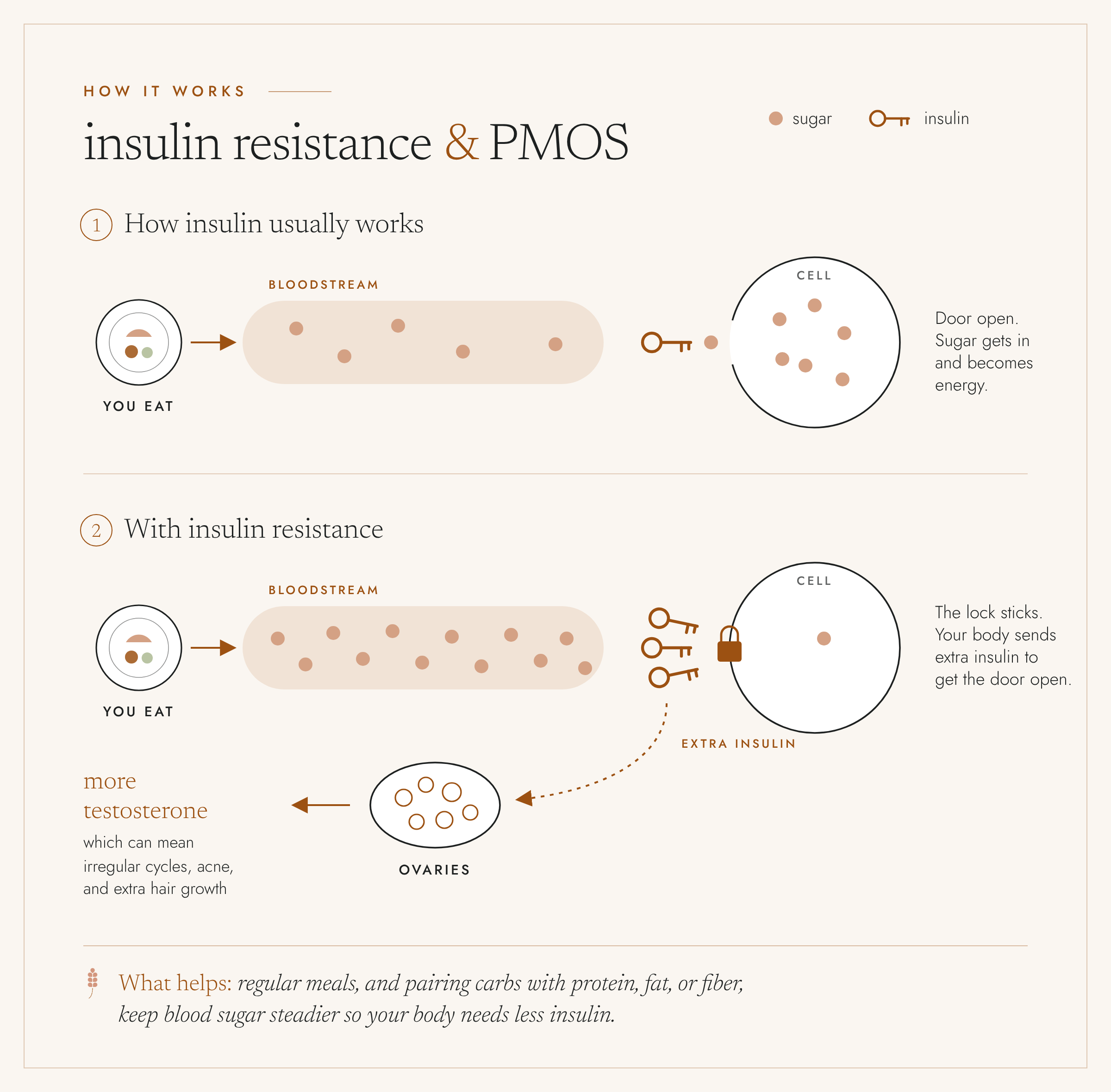
Many people with PMOS have some insulin resistance. Insulin’s job is to move sugar from your blood into your cells, where it’s used for energy. With insulin resistance, your cells don’t respond to it as well, so your body makes extra insulin to get the job done. That extra insulin can signal the ovaries to make more testosterone, which drives many PMOS symptoms. Since carbs raise blood sugar, and blood sugar triggers insulin, cutting carbs became the go-to advice.
The problem is that this skips a few steps. Your body still needs carbohydrates. They’re your brain’s preferred fuel, and they matter for energy, mood, sleep, and focus. And the research doesn’t back up one “PCOS diet.” The 2023 international PCOS guideline found no evidence that any specific eating pattern works better than another.
What happens when you cut carbs anyway
For a lot of people, it goes like this: a few strict days, followed by an afternoon where you’d trade a family member for a bagel. Restriction tends to backfire, and people with PMOS already have higher rates of disordered eating and binge eating. A plan that sets you up to feel out of control around food isn’t helping your hormones.
What actually helps
Keep the carbs, and give them company. Pairing carbs with protein, fat, or fiber slows how quickly they hit your bloodstream, so you get steadier energy instead of a spike and crash. Think toast with eggs, an apple with peanut butter, or rice with chicken and veggies.
Eat regularly. Going long stretches without food and then eating a lot at once is harder on blood sugar than eating something every three to four hours. Many people with PMOS find their 3pm crash gets a lot quieter once breakfast and lunch are actually happening.
Add fiber where it’s easy. Beans, lentils, oats, berries, whole grains, and vegetables all help with blood sugar and digestion. You don’t need to overhaul your meals. Add a handful of something.
Don’t forget about movement and sleep. Both affect insulin sensitivity, often as much as anything on your plate. Movement you actually enjoy counts.
Notice what feels good. Some people feel better with a bit more protein at breakfast. Others notice that a big bowl of pasta on its own leaves them sluggish, while the same pasta with chicken and veggies doesn’t. That’s useful information, not a rule.
What about white bread, sugar, and dessert?
They fit. No single food is going to make or break your PMOS. Banning foods tends to make them feel more powerful, and sneaking them later usually comes with a side of guilt. You can have dessert and still take good care of your blood sugar.
If you’re on metformin or a GLP-1
These medications can make carbs feel easier to manage. Some people find their appetite drops so much that they barely eat. On medication, eating regularly matters even more. Your body still needs fuel, even when your hunger is quiet.
The bottom line
You don’t have to choose between bread and your hormones. The steadiest approach for most people with PMOS isn’t cutting things out. It’s eating regularly, building satisfying meals, and letting go of the idea that one food is going to ruin everything.
If you want help figuring out what works for your body, I’d love to talk. You can learn more about how I support people with PMOS.
Related: Making Sense of Your PMOS Labs
